From World Pulses Day to Everyday Practice
Beans and pulses are celebrated worldwide as essential foods for nutrition, food security, and sustainable agriculture. Marked each year on 10 February, World Pulses Day highlights their global importance across diverse food cultures.
Korea offers a particularly rich case for deeper exploration. Here, beans – especially soybeans – are not simply consumed as individual foods, but transformed into a wide range of everyday ingredients that structure the entire cuisine. Through fermentation, soybeans become jang: pastes and sauces that shape flavor, preservation, and meal composition in daily life.
In December 2024, this depth of practice was internationally recognized when traditional Korean jang-making was inscribed on the UNESCO Intangible Cultural Heritage list under the title “Knowledge, beliefs and practices related to jang-making in the Republic of Korea.” The inscription emphasizes not only techniques, but also family-based transmission, community participation, and the social meaning of everyday food practices.
Alongside this global recognition, Korea also observes Bean Day on February 2 (2.2) – a contemporary cultural initiative that highlights soybean fermentation as a living practice carried by farmers, artisans, educators, and practitioners today.
This first set of articles introduces Korea’s bean culture through heritage, language, celebration, and everyday use. Further parts will explore education, cooking practice, and international applications over time.

Jang as the foundation of Korean cuisine.
Key forms of Korean fermented soybean products: meju (fermented soybean block), doenjang (soybean paste), ganjang (soy sauce), and gochujang (chili paste).
UNESCO Recognition of Korean Jang-Making (2024)
Korean jang-making encompasses the full cycle of producing, managing, and using fermented soybean pastes – doenjang, ganjang, gochujang, and cheonggukjang. It includes. knowledge, beliefs, techniques, and social practices rooted in family life and seasonal rhythms.
Jang has long functioned as the foundation of Korean cuisine, shaping daily meals rather than appearing as isolated dishes. Because each household manages fermentation differently, jang often reflects a family’s history, taste, and continuity.
UNESCO’s recognition draws attention to everyday food practices that can be easily overlooked precisely because they are so common. It highlights the social, communal, and cultural functions of fermentation and affirms jang-making as a living system of knowledge rather than a fixed tradition.
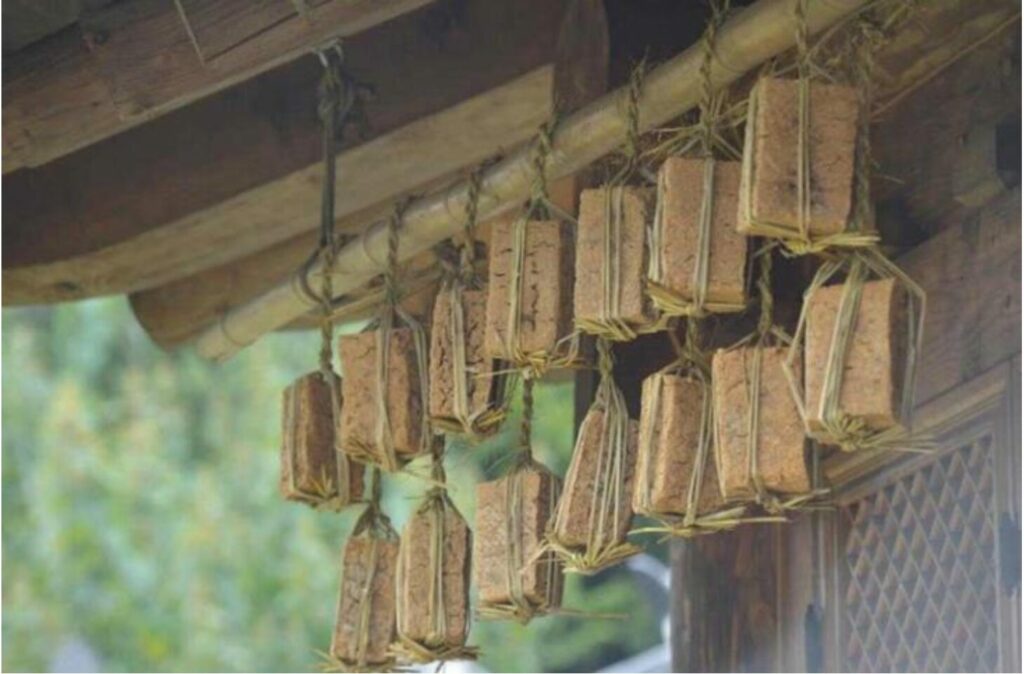
Meju drying
Meju blocks drying for traditional soybean fermentation.
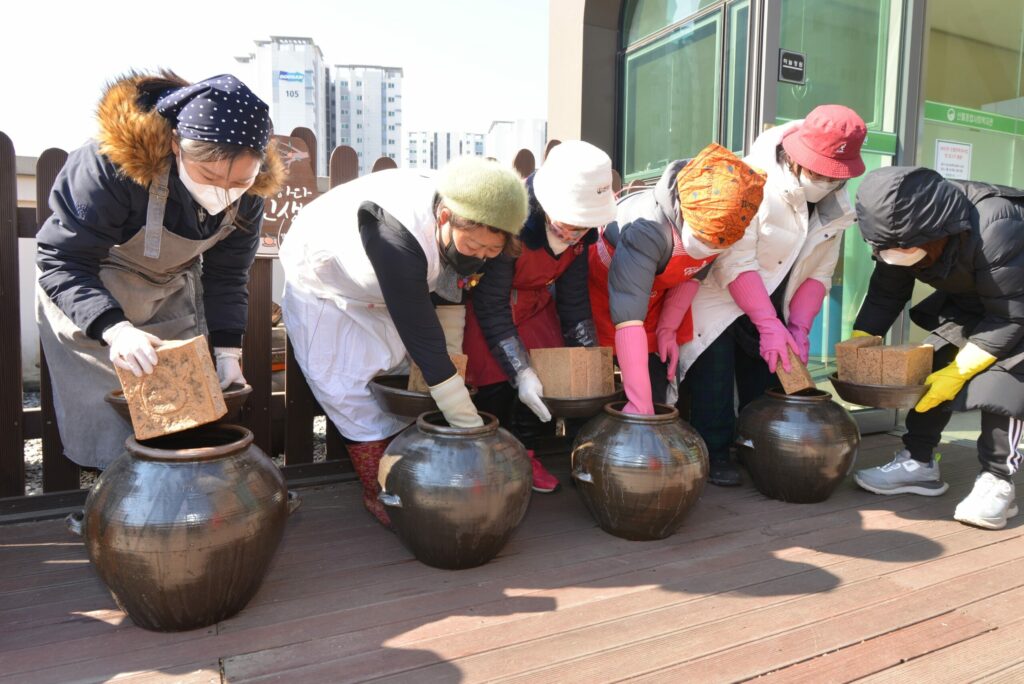
Collective practice
Communal jang-making, transmitting fermentation knowledge across generations.
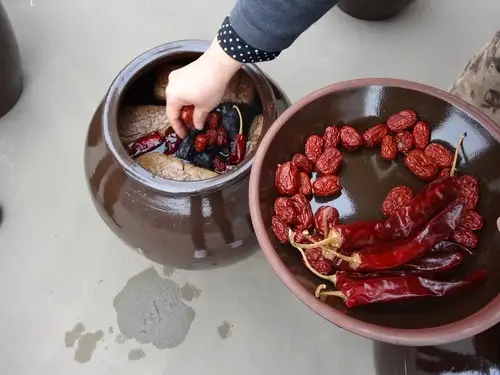
Onggi jars
Managing fermented soybean pastes in onggi jars through experience and care