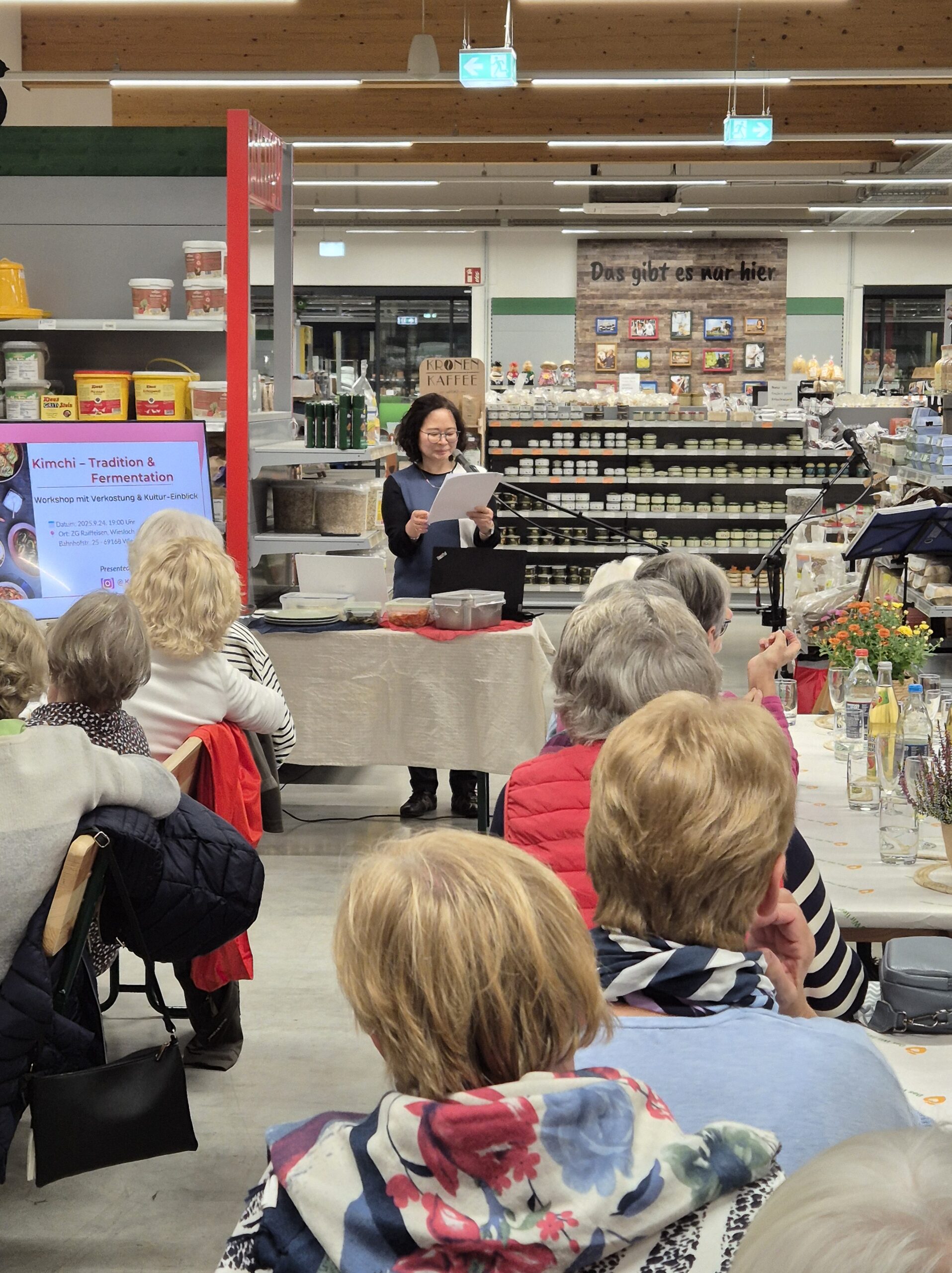
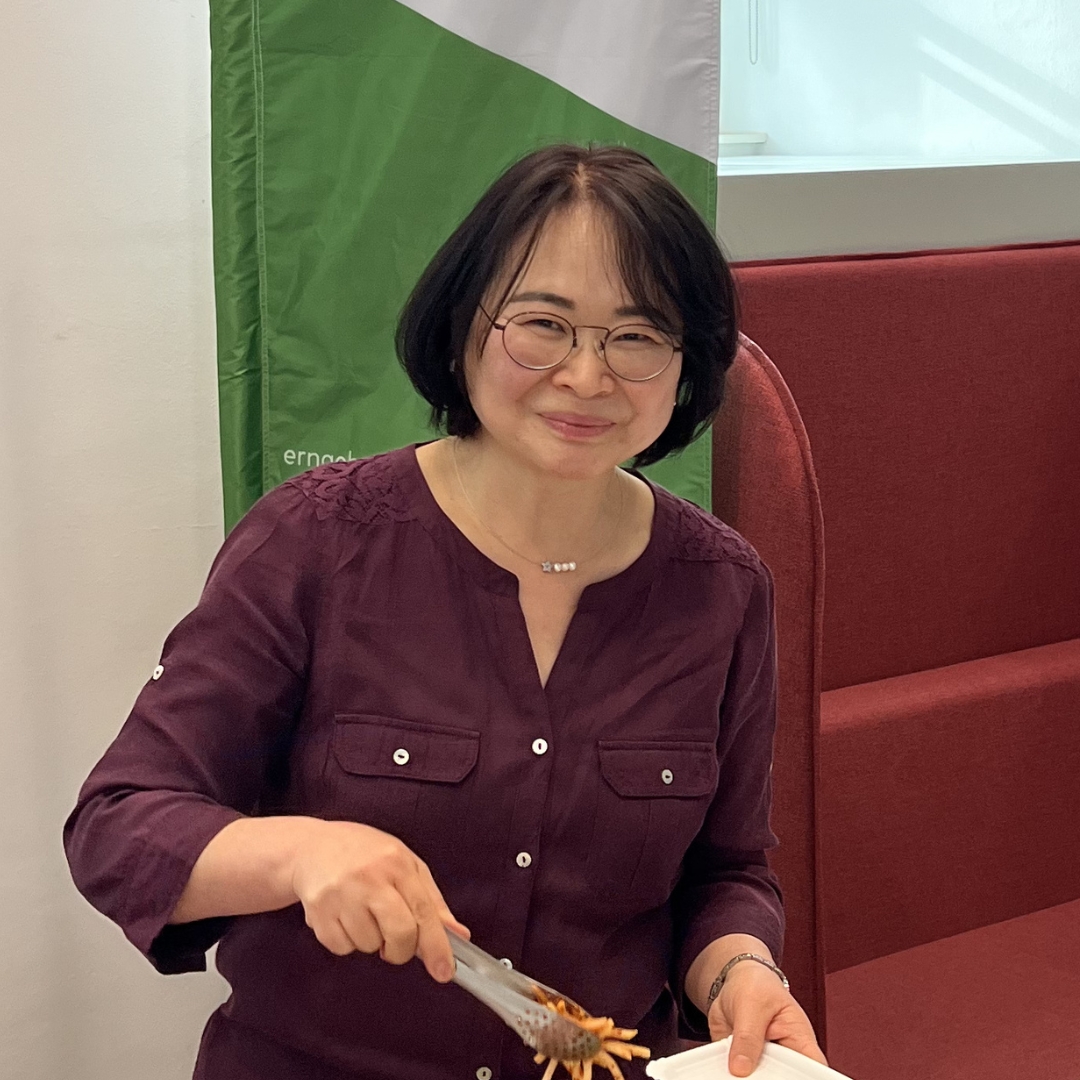
My name is Sungsook Park. I am a food and nutrition specialist born in Korea and based in Heidelberg, Germany. I work at the intersection of Korean fermentation culture and everyday cooking practices, with a strong focus on beans and seasonal ingredients.
After studying food and nutrition in Seoul and conducting public health research in Korea, Japan, and Canada, my earlier work focused on public nutrition, health promotion, and preventive approaches to healthy eating. This included nutrition education through school meals and food-based strategies for long-term health.
This background continues to inform my current work, in which I explore how traditional food knowledge—particularly with regard to beans, fermentation, and seasonal ingredients—can support healthy and practical everyday eating, while taking environmental considerations into account.
My long-standing involvement with Ernährungsrat Heidelberg (Nutrition Council Heidelberg) has been central to this development and continues to shape my work. Being part of the council from an early stage has connected my practice to ongoing discussions and approaches around sustainable food systems in Germany and Europe. It is through this context that I have also become involved with initiatives such as Weltacker and the Global Bean Project.
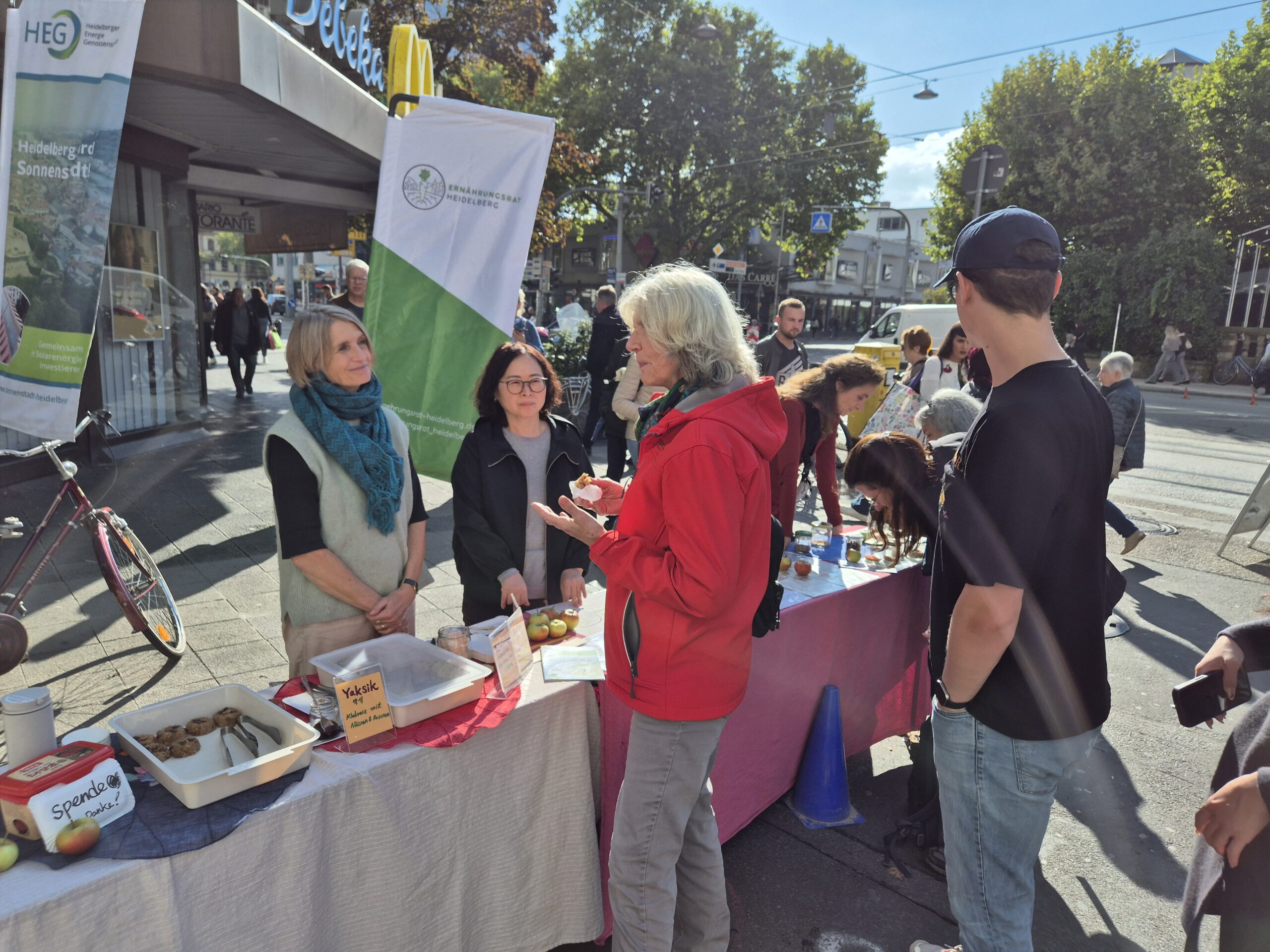
I have been living in Germany since 2015. In the early stages of my work here, my activities mainly focused on planning and participating in Korean food stands at festivals, as well as collaborating with various organisations to promote Korean culture through food. These initial experiences gradually evolved into a more structured and reflective approach.
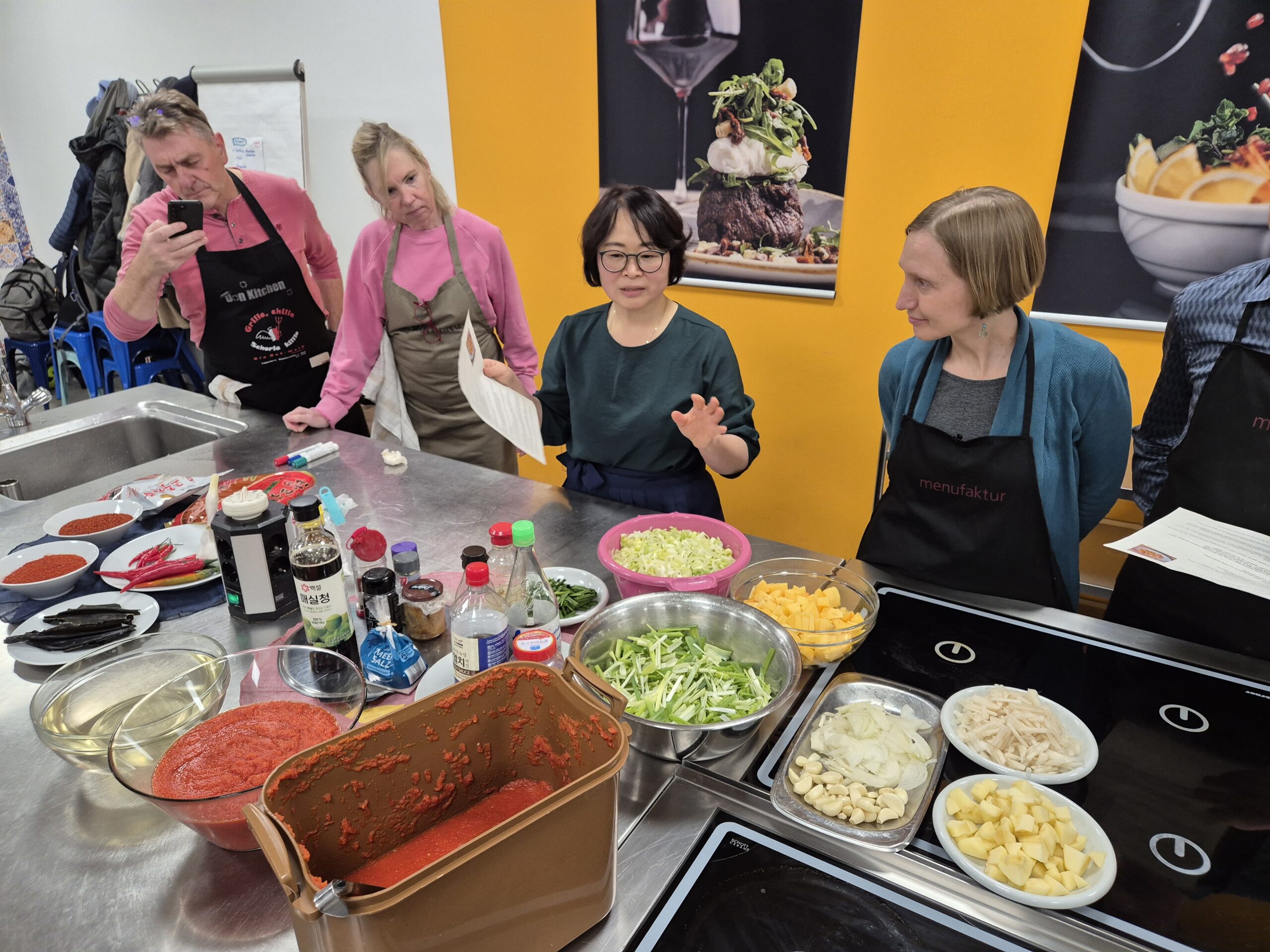
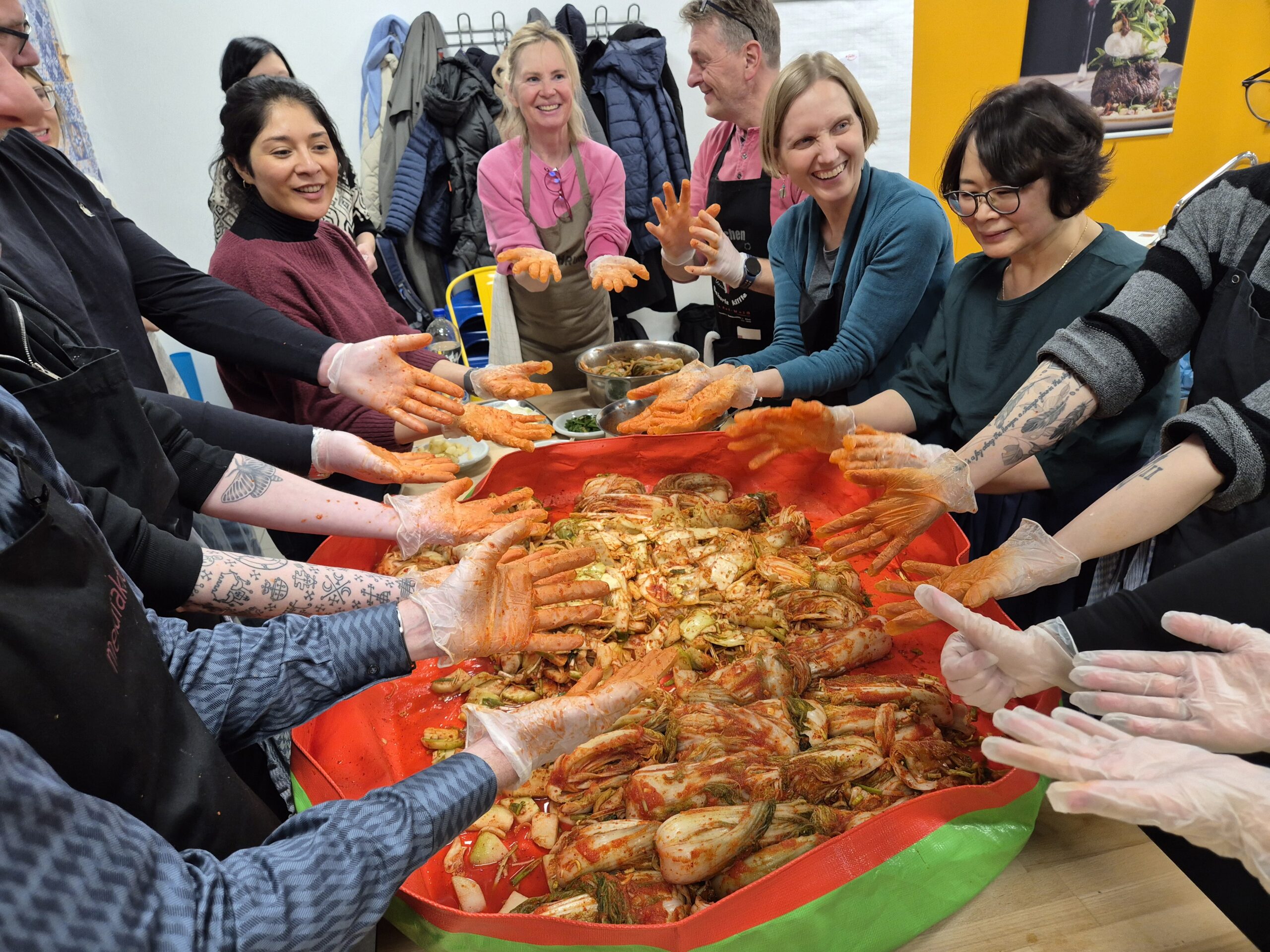
Currently, I deliver Korean cooking and fermentation classes at adult education centres (VHS), run workshops with civic and educational institutions, and actively participate in sustainable food organisations such as Ernährungsrat Heidelberg and Slow Food Germany. Through these activities, I explore ways to incorporate fermentation and vegetable-based dishes into daily meals that are both practical and culturally grounded.
Building on my experience in adult education, I am developing transferable, modular programmes that explore these themes with children, parents, and younger generations. These formats support the adoption of healthy and sustainable eating habits in everyday life through hands-on experience with seasonal vegetables, cooking, and fermentation in garden-based settings.
I contribute a practice-based perspective on Korean bean culture, with a particular focus on fermented soy products (jang), the everyday use of beans, and their role in sustainable diets.
Specifically, I can offer:
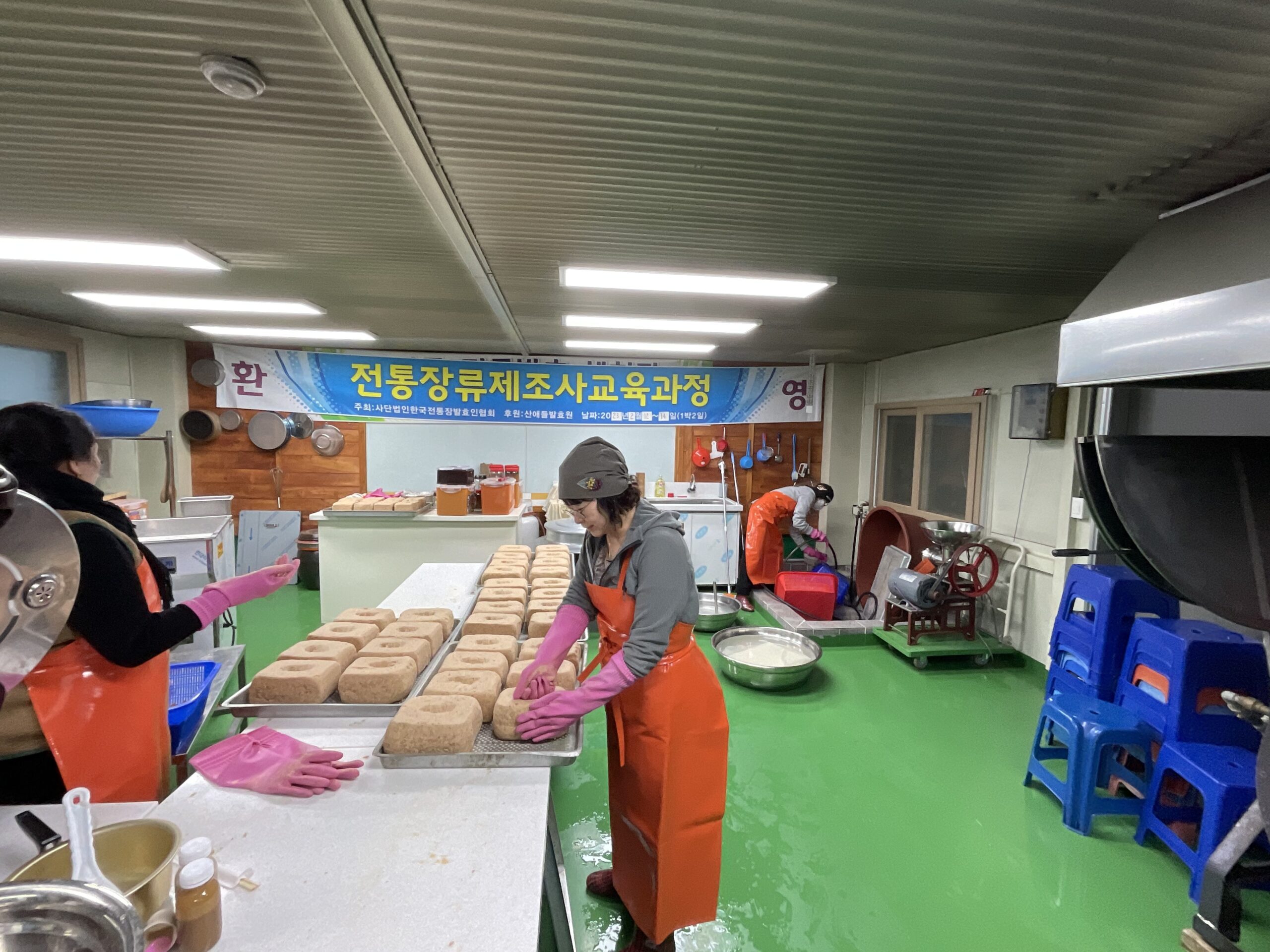
· Knowledge of Korean soybean fermentation—such as doenjang, ganjang, gochujang, and cheonggukjang—understood as living cultural practices
· Experience translating traditional food knowledge into contemporary, plant-forward cooking formats
· Educational and workshop-based approaches that combine cooking, fermentation, and sustainability
· Connections to Korean initiatives including Bean Day (2 February), soybean-related cultural institutions, and fermentation practitioners
· A reflective, non-commercial perspective that links tradition, everyday practice, and broader questions around global food systems
As a practitioner and coordinator, I am particularly interested in connecting cultural knowledge with hands-on formats that support learning, dialogue, and long-term engagement.
We seek:
Through the Global Bean Network, I seek exchange rather than one-directional transfer of knowledge.
I am especially interested in:
· Learning how different cultures work with beans as staple foods, fermented products, and everyday ingredients
· Exchange with practitioners, researchers, and educators working on legumes, fermentation, and sustainable food systems
· Insights into both traditional and contemporary forms of legume processing, including non-food applications where relevant
· Collaborative formats that encourage shared learning, such as discussions, workshops, or joint explorations of practice
I see the network as a space to deepen understanding, ask better questions, and situate Korean bean culture within a broader global context.
We invite you to discover traditions and customs related to pulses in Italy, USA, Korea, and Nigeria. What most customs across these four continents have in common is that beans symbolise good luck and prosperity.
In the latest episode of our Behind the Seeds series, we meet Sara from the Buggiano region of Tuscany. She shows us Fagiolo di Sorana, a very delicate bean with a thin skin. It’s traditionally cooked in a carafe and must be cooked slowly in soft water to preserve its structural integrity.
In the latest episode of our Behind the Seeds series, we meet Sara from the Buggiano region of Tuscany. She shows us Fagiolo di Sorana, a very delicate bean with a thin skin. It’s traditionally cooked in a carafe and must be cooked slowly in soft water to preserve its structural integrity.
You are currently viewing a placeholder content from Turnstile. To access the actual content, click the button below. Please note that doing so will share data with third-party providers.
You are currently viewing a placeholder content from GTranslate. To access the actual content, click the button below. Please note that doing so will share data with third-party providers.
You are currently viewing a placeholder content from Google Maps. To access the actual content, click the button below. Please note that doing so will share data with third-party providers.
 Publications
 Articles