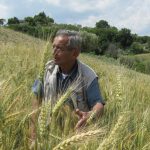
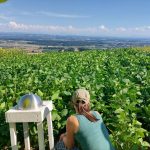
The Stanisław Karłowski Foundation is situated in Juchowo, a village in the north-west of Poland. It was founded in 2001 in the process of rearranging land of former state farms. The Foundation carries out various activities in the field of education and pedagogy, sociotherapy, scientific research and nature protection. The latter one it mainly implements by following the rules of biodynamic agriculture on its 1.900 hectare farm.
a long time experience in organic and biodynamic agriculture; a well developed network of institutions and persons involved in organic agriculture in Poland; and, hopefully in the near future, experience in growing legumes and legume seeds.
We seek:
share experience in growing legumes
spreading the idea of growing legumes as a measure of sustainable farming in Poland, e.g. by translating info material and spreading it.
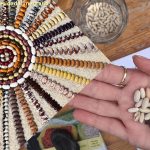
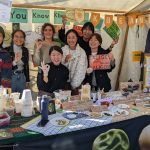
This year, our Global Bean seed festival was extra special. On 22nd April, Global Bean partners across Europe and beyond came together to celebrate the diversity of beans and exchange legume seeds. Seed festivals took place in Greece, Albania, Germany, Ethiopia, Kenya, Switzerland, France, Austria, and Spain. Bean mandala picture credit: Biodiversidad Alimentaria. Contains traditional
World Pulses Day is a global event celebrated on the 10th of February to recognise the importance of pulses as a world food. On this occasion, we asked you about your own personal stories with pulses: What’s your favourite pulse-based dish? Who made it for you? (Grandparents/Friends/Flatmate, etc.) Where and when did you eat it
2022 was a year with a strong focus on legumes for the Global Field Attiswil in Switzerland, and it shows! We can only applaud the team for their creativity in bringing this information to visitors of their Global Field.
I am currently working as a consultant with the Alliance Bioversity International and CIAT in six countries on a project on dynamic mixtures and evolutionary population.
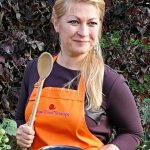
My name is Rūta Beirote and I represent, together with my sister Santa, the farm and family of the Zutini house. Together with our parents and children we run a small farm, where we grow cereals, tomatoes and also legumes – beans and peas.
I’m Nicolas Carton, a french agroecologist and self-proclaimed pulse ambassador. I started the initiative ‘Lumineuses’ during the Covid pandemics to promote pulse crops in the fields and in the kitchens.
Ever heard of “Updrögt beans”, mysterious name for a traditional method of preserving beans? Michael Recktenwald – Chef of the SlowFood Chef Alliance and resident of Langeoog, one of the seven Islands in East Phrygia where those beans originate – shared the story of the beans with the Global Bean team, and now, with you.
Last Saturday at the Global Field in Berlin, surrounded by the luscious plants of the greenhouse, Cecilia Antoni (@bean.beat) of the Global Bean team held a speech about the advantages of pulses in our diet during the evening event, “Iss mir Bohne!”. This event, whose title is a world play on “Eat more beans” and
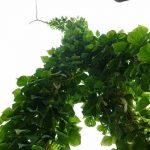
What a ride bean-friends, what a growth! As October creeps in, and the summer heat abruptly leaves way to freezing cold – in Germany at least – what better occasion to look back on where the beans started, and where they are now. In May, as the soil was freezing cold as well in the
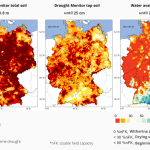
There is no denying that 2022 has been a particularly dry year.
However, for most field crops like pulses, it can be positive to have “dry weather” at the end of the crop cycle for example. Did legume yields suffer from the drought? What parameters are the ones impacting legumes? What are the means to adapt legume cultivation to the drought in Europe?
“Can legumes save the world?”
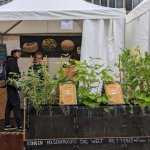
A question we invited visitors to think of at the Global Bean booth for the open-house day of the German Federal Ministry for Environment and Nature Conservation, Nuclear Safety and Consumer Protection (BMUV).
You are currently viewing a placeholder content from Turnstile. To access the actual content, click the button below. Please note that doing so will share data with third-party providers.
You are currently viewing a placeholder content from GTranslate. To access the actual content, click the button below. Please note that doing so will share data with third-party providers.
You are currently viewing a placeholder content from Google Maps. To access the actual content, click the button below. Please note that doing so will share data with third-party providers.
 Events
 Articles